
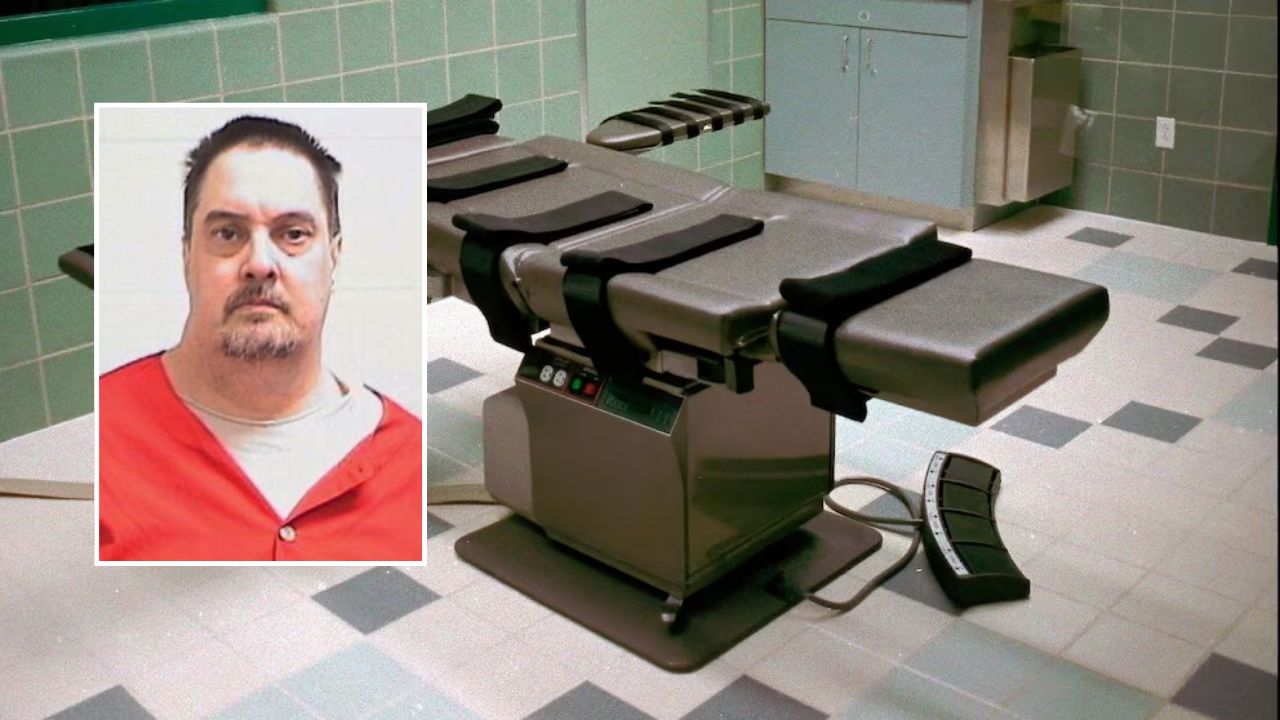
Michigan City, IN — An Indiana man convicted of the brutal 2001 rape and murder of a 15-year-old girl was executed by lethal injection early Friday, marking the state’s third execution since reinstating the death penalty last year.
Roy Lee Ward Executed at Indiana State Prison
53-year-old Roy Lee Ward was pronounced dead at the Indiana State Prison in Michigan City after receiving a dose of the sedative pentobarbital, according to the Indiana Department of Correction.
Ward had been convicted in the rape and murder of Stacy Payne, a 15-year-old honor student and cheerleader from the small community of Dale, Indiana, about 30 miles east of Evansville. Authorities said Ward attacked Payne with a knife and dumbbell inside her family’s home in July 2001, a crime that shocked the town of roughly 1,500 residents.
A Two-Decade Legal Battle Ends
Ward’s execution came after more than two decades of legal proceedings, multiple appeals, and renewed debates over the state’s death penalty procedures.
He was originally convicted and sentenced to death in 2002, but the Indiana Supreme Court overturned the conviction, ordering a retrial. In 2007, Ward pleaded guilty to the same charges and was again sentenced to death.
Over the following years, his attorneys pursued appeals at both the state and federal levels. In 2017, the U.S. Supreme Court declined to hear his case, and in 2019, Ward filed a civil lawsuit against Indiana seeking to halt all pending executions.

Last month, the Indiana Supreme Court denied a stay of execution, and Governor Mike Braun rejected Ward’s clemency request, clearing the way for the execution to proceed.
Concerns Over Execution Drug Protocol
Ward’s attorneys raised concerns about the state’s use of pentobarbital, the sedative used in lethal injections. They questioned how the drug was obtained, stored, and handled, citing possible temperature stability issues.
Indiana resumed executions in 2024 after a 15-year hiatus, saying it had secured a reliable supply of the lethal injection drugs. Officials said the state had “enough pentobarbital to follow the required protocol” for Ward’s execution.
Notably, Indiana and one other state bar media witnesses from attending executions — a policy that has drawn criticism from press freedom advocates. Ward’s witness list included attorneys and spiritual advisers, but no journalists were permitted.
Victim’s Family Speaks of “Enduring Devastation”
During clemency proceedings, Payne’s mother, Julie Wininger, delivered an emotional statement describing the pain her family endured since her daughter’s death.
“Now our family gatherings are no longer whole, holidays still empty. Birthdays are sad reminders of what we lost,” she told the parole board last month. “Our family has endured emotional devastation.”

The family described Stacy Payne as a bright, kind-hearted teen who excelled in school and sports and whose loss “left a permanent void” in the small town.
Ward Expressed Remorse Before Execution
Ward, who was diagnosed with autism spectrum disorder, declined to participate in a final clemency interview, saying he didn’t want to force the victim’s family to travel again.
His attorney, Joanna Green, said earlier this week that Ward was “very remorseful” about his actions and had spent years reflecting on the crime.
Read Also: Michigan Woman Mistook Lottery Call for a Scam — Turns Out She’d Just Won $1 Million
One of Ward’s spiritual advisers, Deacon Brian Nosbusch, said the inmate had accepted responsibility for the murder.
“He knows he did it,” Nosbusch said. “He knows it was horrendous.”

Indiana’s Third Execution Since 2024
Ward’s death marks the third execution in Indiana since 2024, when the state resumed carrying out death sentences after resolving drug availability issues that had delayed executions for more than a decade.
Indiana remains among 27 U.S. states that still maintain capital punishment laws, though executions have become increasingly rare nationwide.
What are your thoughts on Indiana’s use of the death penalty and the questions raised about execution drugs? Join the discussion at hamiltonpawprint.com.