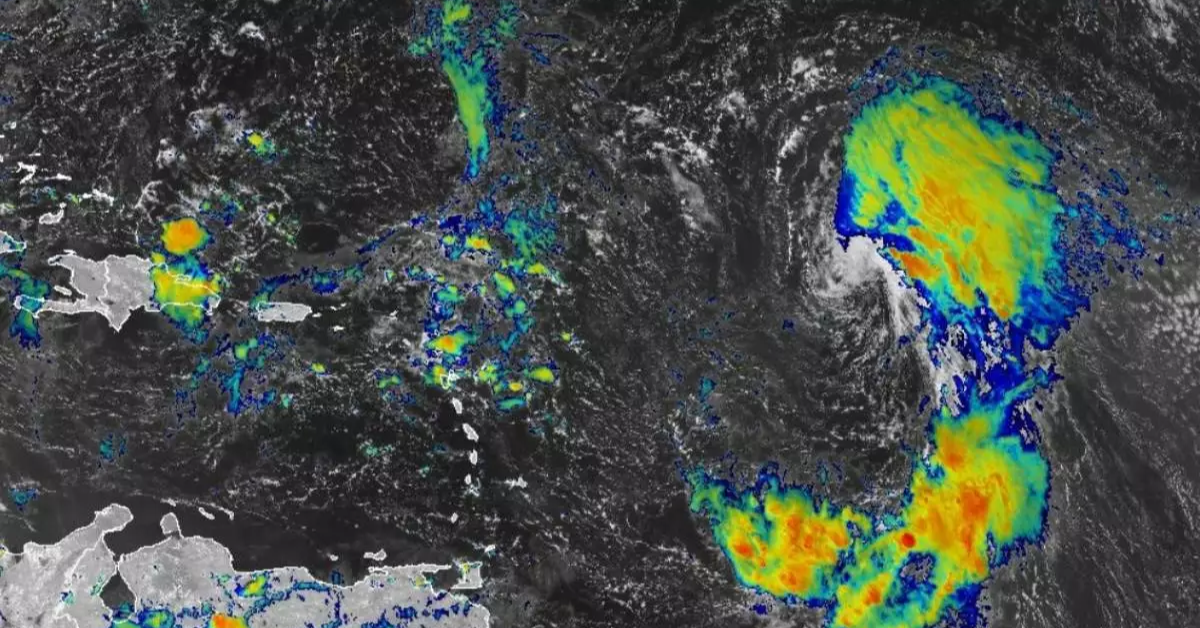
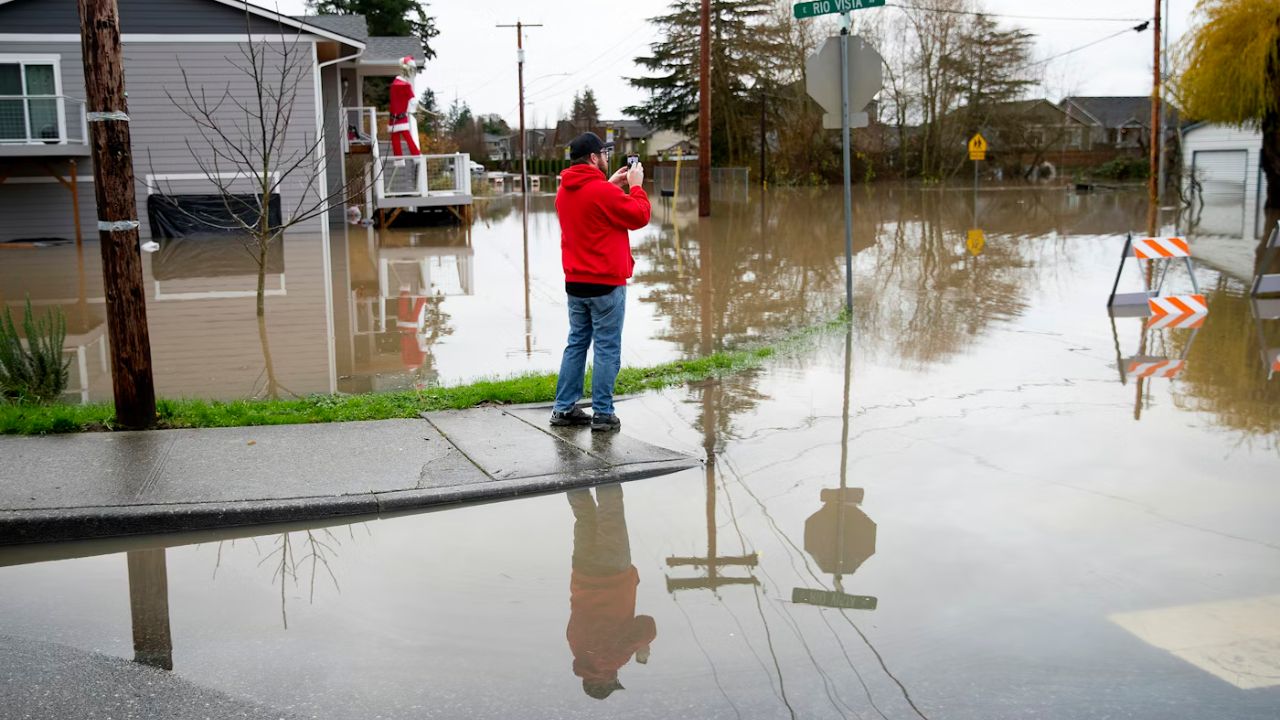
Hamilton, Washington — Washington state remains under a statewide emergency as days of relentless rainfall have pushed rivers to record-breaking levels, flooding entire towns, forcing mass evacuations, and prompting urgent rescue operations across the region.
Governor Bob Ferguson confirmed that the flooding has reached a historic scale, with impacts stretching from the northern reaches of the state to communities south of Seattle.
“This is a statewide emergency,” Ferguson said. “We deeply appreciate the first responders who are out there in the field helping Washingtonians as they deal with protecting their homes, businesses, pets, and loved ones.”
Skagit River flooding triggers mass evacuations
The most severe impacts have been reported along the Skagit River, where water levels surged beyond anything recorded in modern history. Officials ordered nearly 80,000 residents to evacuate from communities near the river as forecasts showed it cresting at record levels on Friday.
According to state officials, the Washington National Guard has been activated to assist with water rescues, evacuations, and emergency logistics, as rising waters overwhelmed neighborhoods and critical infrastructure.
“The severity of the flooding on the Skagit River is something that no local resident has ever experienced,” Ferguson said.
State leaders have formally requested a federal Emergency Declaration, citing widespread damage, displacement, and the need for additional resources.
Hamilton completely submerged by floodwaters
Among the hardest-hit communities is Hamilton, Washington, a small town situated directly along the Skagit River. As the river surged over its banks, the town was completely inundated, leaving homes, streets, and businesses underwater.

Emergency crews worked through hazardous conditions to assist residents, while many were forced to flee with little warning as floodwaters rose rapidly.
Officials said access to some areas remains extremely limited due to flooded roadways and debris, complicating damage assessments and rescue efforts.
Orting faces fast-moving river flooding
Roughly 100 miles south, the city of Orting also faced dangerous flooding after both the Carbon River and the Puyallup River crested on Thursday.
Mayor Joshua Penner described a tense and frightening situation for residents as rivers swelled and moved swiftly through the area.
“Folks are scared right now,” Penner said. “It’s a dangerous situation. You don’t want to get stuck in the river; it’s not a slow-moving river; it’s a very fast-moving river.”
Read Also: Snow Band Stretches From Montana to Pennsylvania Through Sunday, Impacting More Than a Dozen States
An RV park in Orting was inundated, leaving several people stranded. Officials conducted multiple swift-water rescues to reach residents trapped by rising water.
Atmospheric river overwhelms the region
Meteorologists say the flooding was fueled by a powerful atmospheric river, a phenomenon common to the West Coast during winter but far more intense than usual in this case.
“This was not just your typical atmospheric river that caused this,” said AccuWeather On-Air Broadcaster Anna Azallion.
The storm system delivered prolonged, heavy rainfall across western Washington, saturating the ground and overwhelming rivers already running high.
Quinault records extreme rainfall totals
The town of Quinault, located about 70 miles west of Seattle, recorded the highest rainfall totals in the state this week. According to weather data, the area received 17.3 inches of rain, a staggering amount over a short period.
Heavy rain falling in higher elevations rapidly flowed downstream into rivers and low-lying areas, accelerating flood conditions and leaving little time for communities to prepare.
Landslides compound the crisis
In addition to flooding, the storm triggered mudslides and landslides across Washington, particularly in mountainous and steep terrain.
One landslide forced the closure of Interstate 90 for approximately 24 hours, disrupting a major transportation corridor through the state. In more remote areas, officials warned that landslides could take days to clear, leaving some roads impassable and communities temporarily isolated.
Emergency officials cautioned residents to avoid travel unless absolutely necessary, as saturated soil remains unstable.

Brief break before another storm arrives
While rainfall is expected to ease temporarily over the weekend, meteorologists warn that the relief will be short-lived.
“There is an indication that a new atmospheric river will develop and extend all the way from near Hawaii to the coastal areas of the Northwest on Monday,” said AccuWeather Senior Meteorologist Brett Anderson.
This setup, often referred to as the “pineapple express,” can deliver additional rounds of heavy rain to an already saturated region, raising concerns about renewed flooding in communities still recovering from this week’s disaster.
Flood threat could continue into Christmas week
Forecasts indicate that stormy conditions from Washington to Northern and Central California may persist through next week and into the days leading up to Christmas, keeping flood risks elevated across the Pacific Northwest.
Officials are urging residents in flood-prone areas to remain alert, monitor river forecasts, and be prepared for additional evacuation orders if conditions worsen.
For now, emergency crews continue rescue operations, damage assessments, and support efforts for displaced residents as Washington grapples with one of its most destructive flooding events in recent history.
What are conditions like in your community right now? Share your experience and any updates in the comments below.